Route through the Republican offensive of November 1938, a walking tour that allows you to follow in the footsteps of the famous photographer when he documented the last attack of the Republican army in Catalonia.
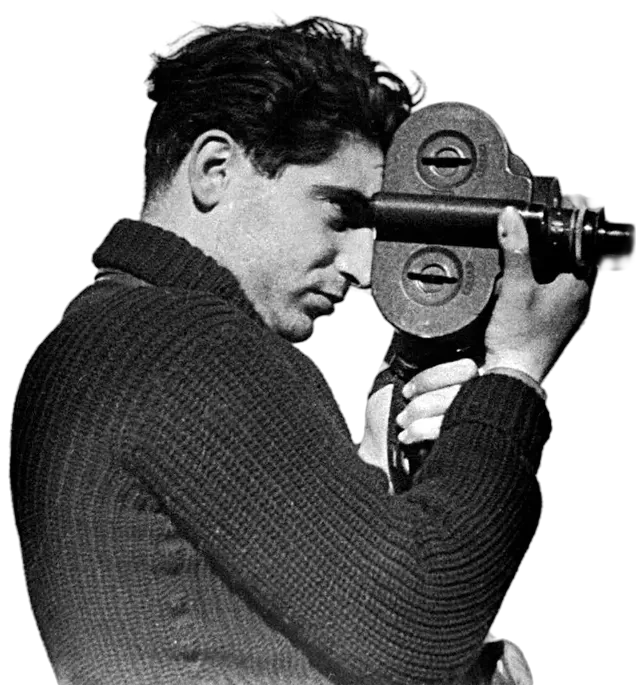
The Hungarian Ernö Friedmann was almost 25 years old when he produced a splendid report on the Republican army's attack on Aitona and the Serrabrisa area. He was already a daring war photographer who, over the years, would establish himself as the best.
He met the German Greta Pohorylle, also a press photographer, with whom he became a romantic and professional partner until her death in the battle of Brunete in 1937, already better known as Gerda Taro.
They both invented the character of Robert Capa to sign their work, a name that Ernö kept until he died following French troops in Vietnam in 1954.
From November 7 to 22, 1938, the Republican army made a final war effort in Catalonia: an offensive that aimed to reach Fraga, place the front line in the Cinca, which had been in the Segre since April, or facilitate the withdrawal of the troops that had been fighting in the Ebro since the 2nd.
The surprise was total, crossing the river through Torres de Segre and Aitona, until establishing a front in 24 hours
of a bridge 4.5 km deep and 13 km long, which included the villages of Soses and Seròs.
The swift reaction of the Francoists halted the attack, and the Republicans began a tough phase of resistance and gradual retreat that culminated fifteen days later with their return to their starting positions.
On the 16th, the last of the "red" troops crossed the Ebro River after 115 days of intense fighting in the mountains near Gandesa. On December 23rd, the final attack on Catalonia by the "national" army began at the Seròs bridgehead.
The 1936 coup d'état marked the beginning of a civil war that ravaged Spanish and Catalan society for three years. The civilian population suffered the hardships of a brutal conflict: torn families, hunger, bombings, death, injuries, exile, repression… The Republican defeat at the Battle of the Ebro led to the fall of Catalonia. Subsequently, exile and repression marked a cruel beginning for Catalonia.
Robert Capa documented the Republican offensive in Aitona on November 7, 1938. Surely, further documentation of the Segre Front can be done to continue building the narrative of the Civil War in our territory.
From the Aitona town council and the Institut d'Estudis Ilerdencs we are looking for studies that build this history and fill possible gaps and voids in the overall narrative.
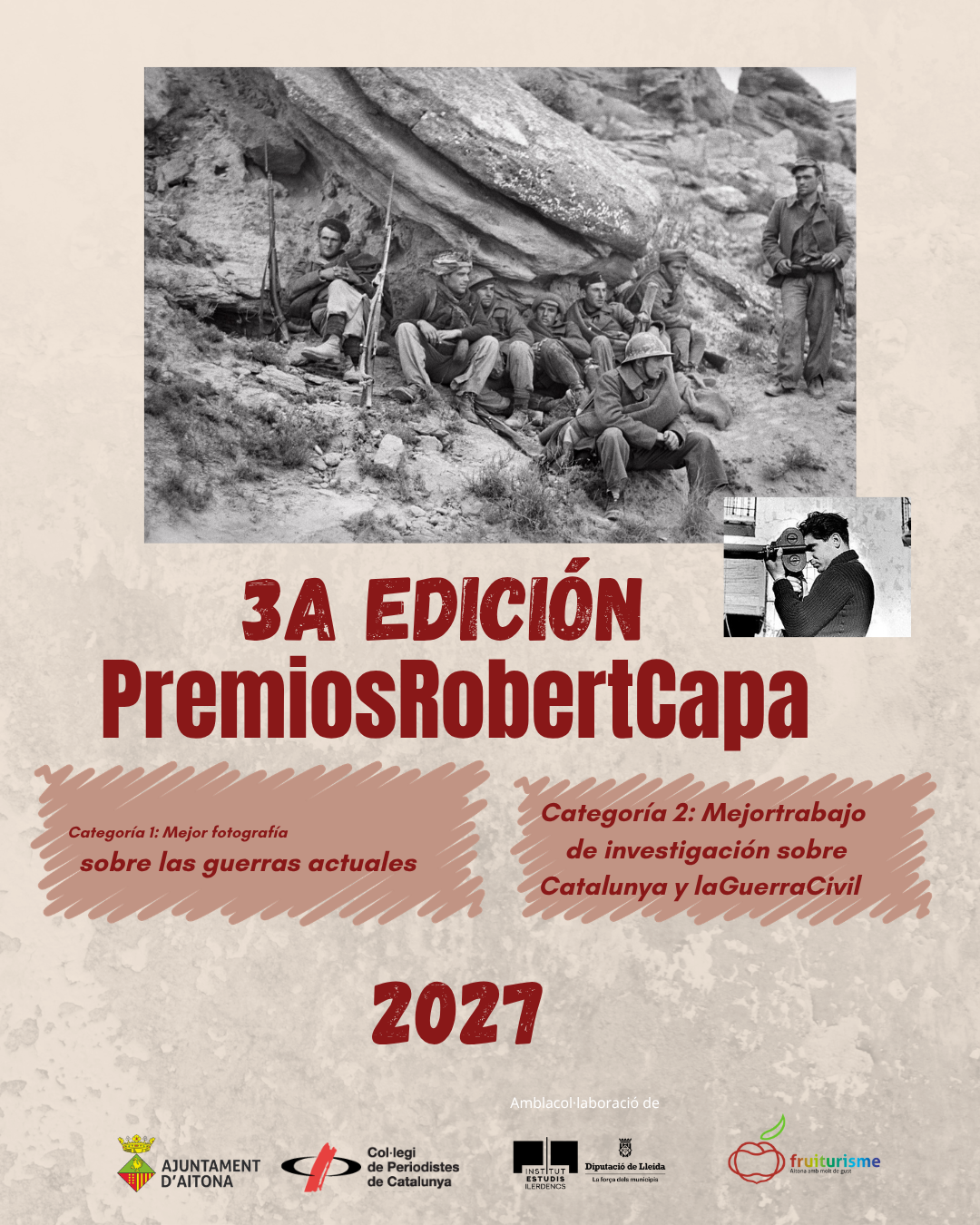
The Capa Awards aim to highlight people, documents and works that contribute, in this aspect, mainly to the Segre Front of the Spanish Civil War.
The second objective is to honor the pioneering war photojournalist of the 1930s, Robert Capa, pseudonym of Ernö Friedmann. He produced a splendid report on the Republican army's attack on Aitona and the Serrabrisa area in the Lower Segre region. A daring photographer who, over the years, established himself as one of the best.
Two categories are established according to the areas we consider essential and necessary to keep the memory alive. Historical research from different perspectives—journalistic, documentary, etc.—journalistic or scientific research, as well as the dissemination of content about Catalonia, can combine historical context, social and cultural impact, and oral history with documents, photographs, and interviews to make it as vivid and visual as possible: photographs that identify conflict zones as a reflection of cruel wars and their effects on society.
Promoted by the Aitona City Council with the Institut d'Estudis Ilerdencs and the collaboration of the Col·legi de Periodistes de Catalunya and Diputació de Lleida